
When Binta Adamu Bello, Director-General of NAPTIP, briefed journalists in Abuja ahead of this year’s World Day Against Trafficking in Persons, she gave a figure that surprised many. All 156 Nigerians rescued by the agency between January and July 2026 had been trafficked into organised online scam centres after being promised jobs abroad. This year the pattern seen is the “Trap Behind the Scam,” and it describes a shift that families need to understand.
Traffickers still exploit people for sex, domestic work and forced labour, but authorities say the crime has evolved into a technology-driven one, with victims promised legitimate work in IT, digital marketing, customer service and cryptocurrency trading. Most of the Nigerians rescued this year had been trafficked to the Mekong region, particularly Thailand, Laos and Cambodia.
The profile of victims has changed too. Bello says the agency used to see mostly people with little education or skills, but many of those now recruited are educated, digitally literate young people, and the youngest rescued this year was 16. Being smart does not protect anyone. These schemes are designed to look professional.
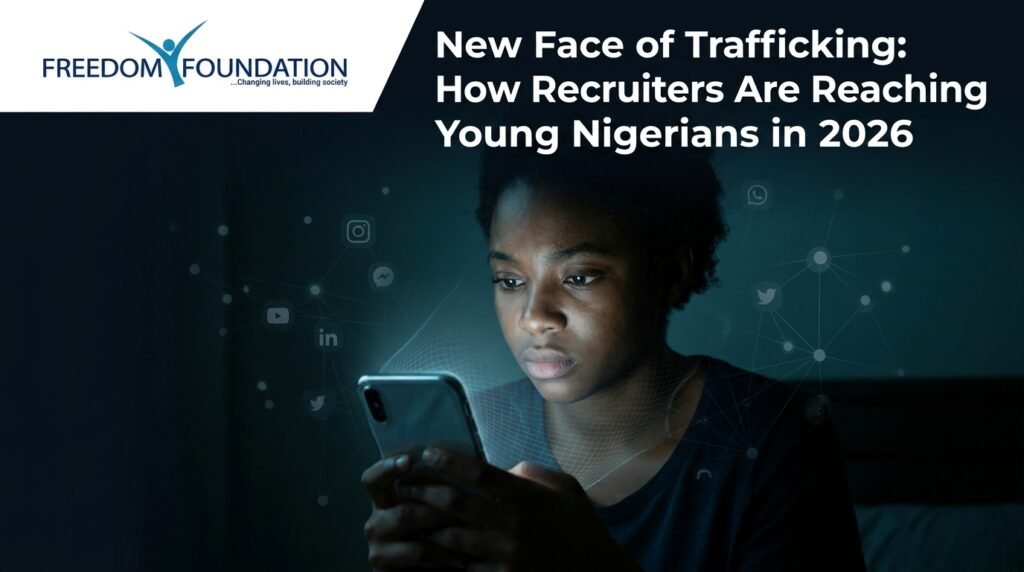
The recruitment follows a pattern. It usually begins with fake social media advertisements for overseas jobs, scholarships or remote work. The target is then moved to encrypted messaging apps, where traffickers build trust and arrange travel. Cybersecurity expert Japhet Johnson says technology has made this far easier. Traffickers create convincing online identities and advertise jobs, scholarships, modelling contracts or travel offers, sometimes using AI-generated images, fake company websites and cloned voices. He names Facebook, Instagram, TikTok, X, LinkedIn, WhatsApp and Telegram among the platforms commonly used. NAPTIP’s Director-General has also described facilitation fees paid in cryptocurrency as part of the process.
The trap closes after arrival. Passports are confiscated, victims are confined in heavily guarded compounds, and those who miss daily fraud targets are subjected to torture, sexual violence and other abuse. The International Organisation for Migration has said that survivors report torture, starvation, prolonged solitary confinement and sexual abuse. The people inside these compounds are victims, not criminals, and they need protection rather than punishment.
The threat is also growing inside Nigeria. NAPTIP says it has uncovered planned scam centres within the country, which it calls “fraud academies” where young people are trained in crimes such as sextortion. For young people, the danger extends to the digital abuse NAPTIP describes elsewhere: online grooming of children that can lead to blackmail and exploitation.
So how can you protect yourself and the people you love? Experts agree on a few warning signs. Be wary of recruitment messages sent from personal email accounts, requests to move to encrypted apps before any formal documentation, demands for visa or processing fees to be paid into personal accounts or crypto wallets, and employers who insist on holding your passport. The UK High Commission and NAPTIP add that legitimate employers do not recruit through social media, demand upfront payments or require travel on tourist visas for work. Verify every company through official registries, use only licensed agencies, and talk to someone you trust before you travel. Johnson’s advice is that urgency should never override verification.
The older forms of exploitation have not disappeared. In May 2025, NAPTIP rescued 78 people, mostly young women lured to Côte d’Ivoire with promises of work and then coerced into sex work. Rescue is only the start of recovery. A survivor who comes home after months of captivity often has no savings, no documents and deep trauma. At Genesis House, we walk with young women through that recovery, with shelter, counselling and training that lead to a livelihood and a future of their own.
If you see a suspicious job advert, report it to NAPTIP. To learn more about our work or support survivors, contact us at info@freedomfoundationng.org.