
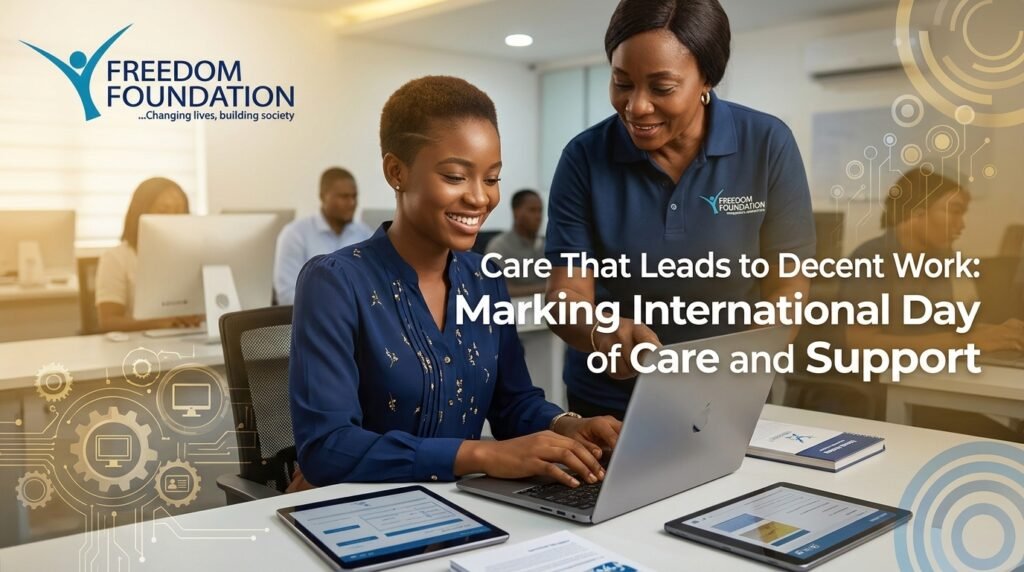
When Blessing came to Genesis House, she had been trafficked and forced into exploitation while trying to survive. Today she runs her own tailoring business and has built a family. She says the programme gave her a second chance. Her story shows what care and support can do when it is more than a bed and a meal: it can lead to work that is safe, paid and her own.
On 29 October, the United Nations marks the International Day of Care and Support. This year’s theme is “Building sustainable care and support systems through decent work.” It puts the spotlight on paid care workers and on the gaps in their rights, working conditions, social protection, safety, skills and pay. The day’s wider aim is to recognise the part care plays in gender equality and in the health of our societies and economies.
The figures show how unevenly the burden falls. Women perform 76.2 per cent of all unpaid care work, more than three times the time men spend on it. The global care workforce includes 249 million women and 132 million men, and the UN expects demand to keep rising, with the number of people who need care predicted to reach 2.3 billion by 2030. Yet the UN notes that care work often comes with low wages or no pay, few benefits and protections, and exposure to physical, mental and sometimes sexual harm. Even in the health and care sector, women earn on average 24 per cent less than their male peers.
At Freedom Foundation, we see care from two sides. First is the care our residents receive. For young women aged 18 to 30 who have survived sexual abuse, trafficking and exploitation, recovery begins with safety and trust. We provide a protected home, trauma-informed counselling, health checks, adult literacy and life-skills sessions over 12 months. Many arrive having known betrayal, so the first weeks are spent on bonding, shared meals and being treated with dignity.
Second side is the care work behind the programme. Counsellors, case managers, trainers, social workers and house staff do demanding, emotionally heavy work every day. This Care and Support Day is a reminder that the people who care for others also need decent conditions, fair pay, training and support of their own. A programme can only be as strong as the people who run it, and we are committed to keeping our own team supported.
The theme’s focus on decent work matters just as much for our graduates. Care does not end when a woman leaves the home. A survivor who has no income and no skills is the most likely to accept unsafe or unfair work, so the programme builds a route to economic independence. Residents train in a trade of their choice, such as fashion design, hairdressing, catering or make-up, then complete a monitored internship with an established business. They graduate with a business starter kit, so they can start earning on their own terms. More than 189 young women have completed this path and gone on to employment, their own businesses or higher education.
Care is not charity, and it is not only women’s work. It is a shared responsibility, and it is the foundation on which dignity, safety and opportunity are built. This year, we invite you to recognise the carers in your own life, to ask whether the people who care for others are treated fairly, and to support the care that helps survivors rebuild.
To learn more about or support our work, contact us at info@freedomfoundationng.org.