
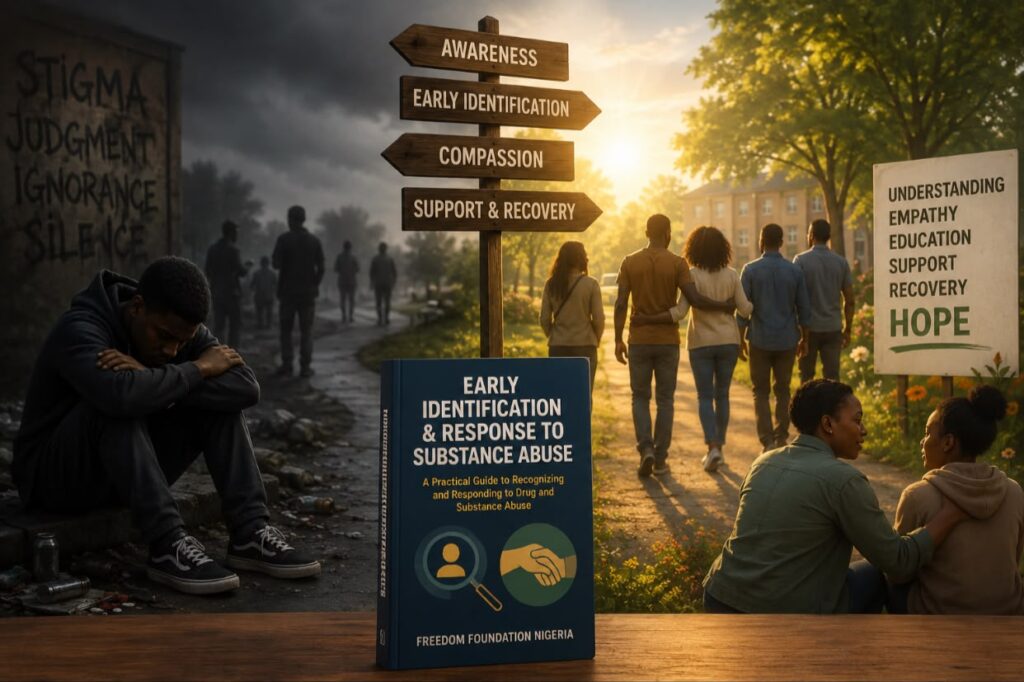
Imagine watching someone you care about slowly change. They become withdrawn, lose interest in the things they once loved, begin acting differently, and you can’t quite explain why. You tell yourself it’s probably just stress or a difficult phase. Days turn into weeks, and before anyone realizes what’s happening, the problem has grown far beyond what it once was.
Now imagine if someone had recognized the warning signs earlier.
That is exactly where Early Identification & Response to Substance Abuse: A Practical Guide to Recognizing and Responding to Drug and Substance Abuse begins. Rather than waiting until addiction has taken over, this guide challenges readers to ask an important question: What if we could help before it’s too late?
From the very first pages, the book shifts the conversation from punishment and blame to prevention, awareness, and hope. Written in clear, straightforward language, it explains the causes, risk factors, warning signs, and effects of substance abuse without overwhelming the reader with technical jargon. Whether you’re a teacher, parent, employer, religious leader, counselor, or simply someone who wants to make a difference, the guide feels like it is speaking directly to you.
What makes this book especially powerful is that it doesn’t stop at helping readers recognize the signs—it teaches them how to respond. Instead of encouraging judgment or confrontation, it promotes empathy, understanding, and practical action. Readers learn how to approach someone with compassion, start supportive conversations, and connect them with the professional help they need.
One of the most memorable lessons from the guide is its reminder that people struggling with substance abuse are not defined by their addiction. They are human beings who deserve dignity, encouragement, and the opportunity to recover. This compassionate perspective transforms the book from being just an educational resource into a call for communities to become places of healing instead of stigma.
By involving families, schools, workplaces, religious organizations, and the wider community, the guide shows that preventing substance abuse is everyone’s responsibility. It emphasizes that early intervention can save relationships, restore lives, and even prevent tragedies that could have been avoided through timely support.
Overall, Early Identification & Response to Substance Abuse is a practical roadmap for creating safer, healthier, and more informed communities. It combines evidence-based information with practical advice that readers can apply immediately in everyday life.
Do you want to better understand substance abuse and play an active role in prevention and early intervention? Then get a copy of this guide.
This is your reminder that sometimes, recognizing the signs early and responding with compassion can change the course of someone’s life.
Get Your Copy of the Guide HERE