Every year, millions of people around the world are deprived of their freedom through human trafficking and sexual exploitation. Behind every statistic is a person whose dreams, dignity, and sense of safety have been taken away. While these crimes often remain hidden, their impact is profound, affecting individuals, families, and entire communities.
Human trafficking is one of the fastest-growing forms of organized crime globally. According to the United Nations Office on Drugs and Crime (UNODC), the number of trafficking victims detected worldwide increased by 25% in 2022 compared to 2019, reaching the highest level ever recorded. Women and girls accounted for 61% of detected victims, while children made up 38%, highlighting the disproportionate impact on society’s most vulnerable populations.
Trafficking is not limited to one form of abuse. Survivors may be subjected to sexual exploitation, forced labour, domestic servitude, forced marriage, online exploitation, or criminal exploitation. Poverty, unemployment, gender inequality, family instability, conflict, and displacement continue to increase the risk of exploitation, particularly for women and young people seeking better opportunities.
The scale of the crisis is even greater than reported cases suggest. The International Labour Organization (ILO), International Organization for Migration (IOM), and Walk Free Foundation estimate that nearly 50 million people were living in modern slavery in 2021. This includes approximately 28 million people in forced labour and 22 million trapped in forced marriages, demonstrating that exploitation remains one of the world’s most urgent human rights challenges.
The Nigerian Reality
Nigeria continues to face significant challenges related to human trafficking and sexual exploitation. The country serves as a source, transit, and destination for trafficking, with women and girls particularly vulnerable to exploitation both within and beyond its borders. Economic hardship, irregular migration, limited educational opportunities, and deceptive recruitment tactics have made many young people susceptible to traffickers who prey on hope and desperation.
While law enforcement and government agencies continue to strengthen efforts to combat trafficking, prevention, survivor protection, and long-term rehabilitation remain equally essential. Rescue is only the beginning of recovery. Survivors need safe spaces, emotional healing, education, life skills, and sustainable opportunities to rebuild their lives.
From Survival to Restoration: The Genesis House Approach
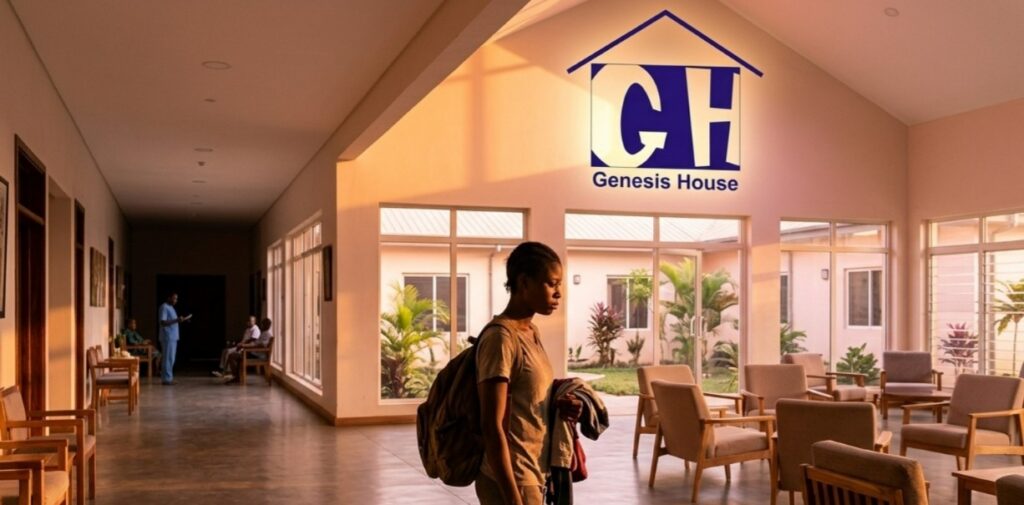
This is where Genesis House, a programme of Freedom Foundation, is making a lasting difference. Established in 2006, Genesis House provides a safe, residential rehabilitation programme for young women aged 18–30 who have experienced sexual abuse, trafficking, exploitation, or commercial sexual exploitation. Rather than simply offering temporary shelter, Genesis House provides a pathway to lasting recovery by addressing the emotional, psychological, educational, social, and economic needs of every resident.
Over a 12 to 18-month rehabilitation journey, each participant receives individualized support tailored to her unique experiences and goals. Services include trauma-informed counselling, psychosocial support, educational opportunities, vocational and life-skills training, mentorship, healthcare referrals, and reintegration support. The programme is built on the belief that every woman deserves not only protection, but also the opportunity to reclaim her confidence, discover her potential, and build an independent future.
This holistic, survivor-centred approach reflects Freedom Foundation’s commitment to restoring dignity rather than simply responding to crisis.
The impact speaks for itself. Since its inception, more than 182 young women have successfully graduated from Genesis House, leaving equipped with practical skills, renewed confidence, and opportunities for employment, entrepreneurship, or further education. Across Freedom Foundation’s wider programmes, over 815 individuals have been rehabilitated and empowered, demonstrating that sustained care and community support can transform lives.
Why Awareness Matters
Human trafficking and sexual exploitation thrive in environments where silence, stigma, and misinformation persist. Raising awareness is one of the most effective tools for prevention. It enables families to recognise warning signs, encourages communities to support survivors without judgement, and helps create systems that protect those most at risk.
Ending exploitation requires collective action. Governments, civil society organisations, schools, faith communities, businesses, and individuals all have a role to play in creating safer communities where every person is treated with dignity and respect.
At Genesis House, every restored life tells a powerful story. A woman who returns to education, secures meaningful employment, starts a business, or confidently reintegrates into her community represents more than personal success; she represents hope, resilience, and the possibility of breaking the cycle of exploitation for generations to come.
As the global community continues to confront the realities of human trafficking and sexual exploitation, programmes like Genesis House remind us that lasting change is possible. By investing in survivor-centred rehabilitation, promoting awareness, and strengthening partnerships, we can help build a future where every survivor has the opportunity not only to recover, but to thrive.
By Akubueze Chelsea